Have you ever stared at a table so completely covered in small white porcelain plates, tiny jam jars, and bread baskets that you wondered if an entire village was expected to join you? If you have recently arrived or are planning a trip, welcome to the world of kahvaltı—a word that literally translates to “before coffee” (kahve plus altı). As the culture and everyday life editor here at Before Turkey, I often watch newcomers freeze the moment a traditional morning feast arrives. They try to find the main dish, completely missing the point that the joy is in the scattered, chaotic harmony of it all.
If you want to understand how a typical morning unfolds here, this Turkish breakfast guide will walk you through the real rhythm, the endless tea, the regional quirks, and the gentle social laws of the most important meal of the day. Forget grabbing a quick pastry on your way to work; mornings here are an institution.
Understanding the Rhythm of Kahvaltı
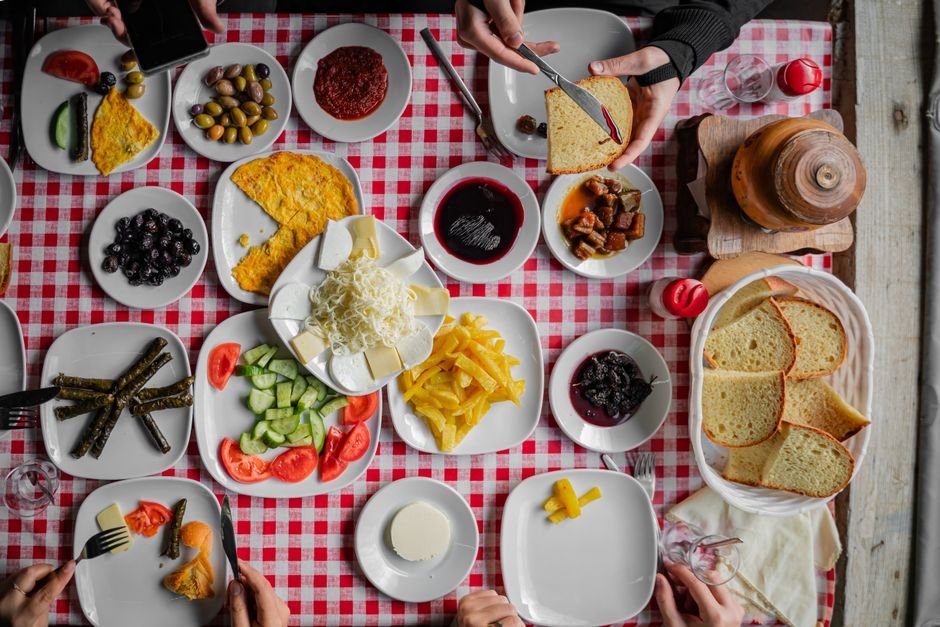
The first thing to unlearn about a traditional Turkish breakfast guide reality is the Western concept of individual plating. In a true kahvaltı, you do not order your own plate of eggs and toast. Instead, the table becomes a communal canvas. Small dishes of olives, cheeses, honey, butter, and tomatoes are placed in the center, and everyone shares. You sample a bit of salty feta here, dab some thick clotted cream (kaymak) with grape molasses onto a piece of warm bread there, and sip your tea constantly.
This is not a meal meant to be rushed through while scrolling emails. Even on a busy weekday, a family breakfast involves sitting down together, breathing, and letting the day start slowly. On weekends, it stretches into a multi-hour social event. Friends meet at neighborhood spots, parents bring toddlers who end up playing with breadcrumbs, and couples talk for hours over empty glass tulip cups. It is as much about lingering conversation as it is about food.
The Undisputed King: Black Tea (Çay)
You cannot talk about mornings here without talking about tea. While many cultures rely on coffee to jumpstart their brain cells, Turkey runs on endless streams of freshly brewed black tea, served in hourglass-shaped glass cups that let you admire the deep amber color. Before any food is touched, the tea arrives. It is hot, strong, and bitter enough to balance the richness of the cheeses and butter.
A good host or waiter will never let your glass stay empty. The moment it drops below the halfway mark, a fresh stream of tea is poured from the top pot of the double-decker tea kettle (çaydanlık). If you are navigating daily life here—perhaps while looking into Moving to Turkey Checklist for Foreigners—you will quickly realize that refusing tea is viewed almost as a polite social puzzle. It is simply the baseline of hospitality.
What Actually Lands on the Table
While menus at tourist-heavy cafés might try to dazzle you with twenty-four different items, a genuine home-style spread centers around a few key, non-negotiable elements:
- Bread (Ekmek): White crusty bread (somun) or flatbreads like pide are mandatory. The bread basket is always refreshed, and it acts as the primary vehicle for everything else.
- Cheese (Peynir): You will rarely see just one type of cheese. There is usually crumbly white sheep’s milk cheese (beyaz peynir), aged yellow cheese (kaşar), and sometimes stringy or spicy regional varieties.
- Olives (Zeytin): Both salty green and cured black olives, often drizzled with olive oil, oregano, and red pepper flakes.
- Eggs (Yumurta): Usually served as menemen—eggs scrambled with gently cooked tomatoes, green peppers, and spices—or as fried eggs with spicy Turkish sausage (sucuk).
- Sweet Spreads: Real honeycomb paired with clotted cream (kaymak), plus various homemade fruit preserves like sour cherry, fig, or strawberry.
When you are out exploring different areas, finding a great morning spot is part of the fun. If you happen to be wandering through the historic lanes mentioned in our Istanbul Neighborhoods for First-Time Visitors guide, you will spot small bakeries and cafes setting out white tablecloths as early as eight in the morning.
Cafés versus Homes: Two Different Worlds
There is a distinct difference between eating at home and going out to a commercial breakfast spot (kahvaltı salonu). At home, the spread is practical, comforting, and tailored to what is in the refrigerator. Leftover roasted vegetables, a wedge of yesterday’s cheese, and a fresh pot of tea make a wonderful morning.
Cafés, on the other hand, have turned the morning meal into an art form. If you visit a popular venue, particularly in neighborhoods near the water or in trendy districts, you might be served a “serpme kahvaltı”—a sprawling feast where thirty or forty small plates cover every square inch of the table. It is an impressive sight, but it can also lead to food waste if you are not careful. Locals often prefer ordering a smaller base plate (serpme for fewer people or a simpler plate called kahvaltı tabağı) and adding specific items like a hot pan of menemen or fried halloumi cheese.
Regional Variations Across the Map
Turkey is geographically vast, and culinary traditions shift dramatically as you travel. While the standard spread described above is common nationwide, regional breakfast habits tell a different story of local agriculture and climate.
In the Black Sea region, mornings are heavy, buttery, and built for mountainous terrain. Here, you will encounter muhlama (also known as kuymak)—a bubbling, stretchy concoction of cornmeal, butter, and rich local cheese that pulls apart in long, decadent threads. It is dense, warming, and designed to keep farmers fueled through chilly mountain air.
Head down toward the Aegean or Mediterranean coasts, and the table shifts toward lighter, herbal freshness. You will find wild herbs picked from the hillsides, local olive oils infused with thyme, cucumbers still crisp from the garden, and citrus jams made from bitter oranges grown in the backyard. The mood here matches the scenery: relaxed, sun-drenched, and unhurried.
Further east, in cities like Gaziantep or Van, mornings take on a truly legendary status. A traditional Van breakfast (Van kahvaltısı) is famous across the country for incorporating wild garlic herb cheese (otlu peynir), honey from high-altitude plateaus, and regional pastries baked in stone ovens. It is a feast that requires an empty stomach and an entire morning to appreciate properly.
Navigating Your First Big Breakfast
If you are sitting down to your first massive spread, a few insider tips will help you look like a seasoned regular:
- Pace yourself. Do not eat all the bread and butter in the first ten minutes; the hot eggs and pastries usually arrive shortly after the cold dishes are set down.
- Mix sweet and savory. Putting a bit of salty white cheese on bread with a dab of strawberry jam is a surprisingly delicious local combination.
- Keep track of your tea consumption. In casual neighborhood spots, waiters keep a mental tally of how many empty glasses you leave behind. It is a quiet, friendly system based on trust.
More than anything, remember that breakfast here is a social ritual. Whether you are sharing a modest plate in a quiet alleyway or indulging in a massive weekend spread overlooking the water, let go of your schedule. Pour another glass of tea, break off another piece of warm bread, and enjoy the slow art of morning life.