The afternoon dust over the Anatolian plateau often carries a dry, ancient scent, hinting at the complex stone world hidden beneath the surface of Cappadocia underground cities. Stepping down into these multi-tiered volcanic labyrinths means leaving behind the sunlit fairy chimneys and terracotta-tiled roofs of the villages above for a silent, carved-out realm where ancient communities once sought refuge from invaders. For the traveler standing at the crossroads of Central Anatolia, the fundamental dilemma rarely centers on whether to explore subterranean history, but rather which subterranean marvel to choose when time and energy are finite. Two massive sites dominate the conversation: Kaymaklı and Derinkuyu. Though both share a volcanic cradle and a subterranean language of stables, kitchens, and ventilation shafts, their architectural personalities, spatial rhythms, and emotional weight differ profoundly.
When planning a journey through this historic region, understanding how these subterranean complexes fit into a broader itinerary—perhaps alongside a Turkey 7 day itinerary budget—helps balance exploration costs and daily pacing. Yet, choosing between Kaymaklı and Derinkuyu requires looking past simple tourist metrics and examining how each site feels underfoot, how tightly the walls press in, and how deep the stone truly goes.
Decoding the Subterranean Architecture of Cappadocia Underground Cities
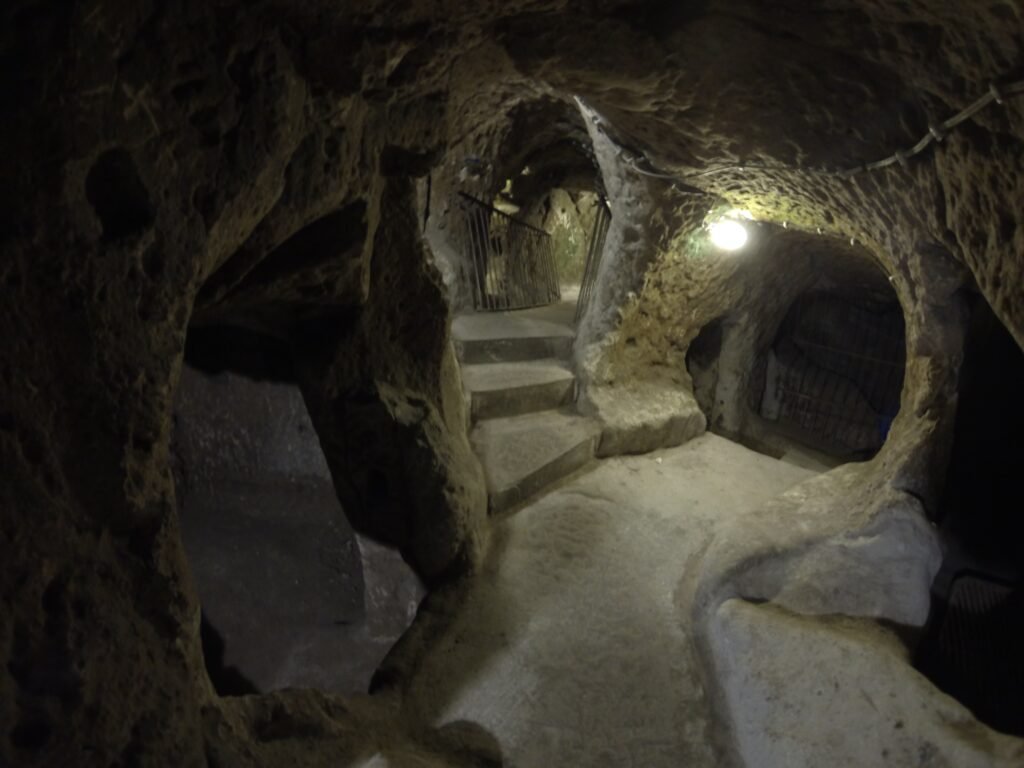
Cappadocia underground cities are monumental feats of excavation carved into the soft, pliable tufa stone formed by prehistoric volcanic eruptions. Derinkuyu descends to a staggering depth of approximately eighty-five meters across multiple subterranean levels, while Kaymaklı spreads out with a slightly shallower, more horizontal complexity across its accessible tiers. To understand these sites is to realize they were not mere hiding spots, but fully functioning subterranean towns complete with communal kitchens, wine presses, churches, graves, and intricate stone rolling doors designed to seal passages from the inside out. Ventilation shafts piercing deep into the surface supplied oxygen, maintaining a remarkably stable subterranean climate year-round, yet the density of the carved chambers creates vastly different navigation experiences for modern visitors.
The engineering behind these networks reflects a deep understanding of geological stability. Early communities utilized the soft nature of the volcanic rock to carve out vertical shafts that doubled as communication channels and fresh air corridors, while interlocking rooms provided structural support against collapses. Walking through these corridors today, one senses the meticulous labor of generations who shaped the earth to secure their survival.
Layout and Spatial Flow: Horizontal Labyrinth vs. Vertical Abysm
The spatial logic of Kaymaklı feels distinctly domestic, winding, and organic. As you step through its narrow entryways, the layout unfolds like an ancient village compressed into the rock, with wider spaces opening up into stables and storage rooms on the upper levels before descending into tighter residential quarters. It encourages a sense of wandering through a subterranean neighborhood where rooms cluster around communal hubs. Because the excavation is spread across a broader footprint relative to its depth, the transition between levels feels gradual, offering frequent opportunities to pause in larger chambers before moving deeper.
Derinkuyu, by stark contrast, is an exercise in vertical drama and sheer scale. Descending into Derinkuyu feels like plunging into the earth’s core. The staircases are steep, the corridors narrow sharply, and the sense of downward momentum is relentless. Entire levels dedicated to specific functions—such as a massive vaulted missionary school on the middle tiers—demonstrate an urban organization designed to house thousands of souls under extreme duress. Where Kaymaklı feels like a collection of interconnected caves, Derinkuyu feels like an engineered subterranean metropolis built along a vertical axis.
Walking Difficulty and Physical Demands
Navigating these ancient chambers requires an honest assessment of your physical comfort and mobility. Neither site is forgiving to those with severe back problems, knee injuries, or vertigo, but the physical strain manifests differently in each location.
- Kaymaklı: Features shorter stair runs and wider corridors overall, though certain passages still require ducking or bending at the waist. The walking routes loop efficiently, making it easier to turn back or adjust your pace.
- Derinkuyu: Demands sustained exertion. Visitors must negotiate steep, sometimes damp stone steps while keeping pace with tour groups moving through bottlenecked passageways. The descent is long, and the subsequent climb back up out of the depths tests cardiovascular endurance.
Visitors planning extensive physical explorations across the region often benefit from reviewing general travel preparations, such as ensuring comprehensive Turkey travel insurance is secured before embarking on active outdoor and subterranean adventures.
Claustrophobia Concerns and Psychological Atmosphere
The most frequent hesitation visitors voice before entering Cappadocia underground cities is the fear of enclosed spaces. The psychological weight of stone pressing in from all sides is real, and the atmosphere inside these subterranean settlements can trigger anxiety for susceptible individuals.
Kaymaklı tends to be more forgiving for the mildly claustrophobic. Many of its upper chambers feature higher ceilings, and the layout occasionally opens up into wider communal areas where the feeling of confinement lessens. Natural or artificial lighting is distributed reasonably well, and escape routes or turnaround points are relatively straightforward during normal operating hours.
Derinkuyu, however, is a rigorous test for anyone uncomfortable with tight spaces. Several corridors require single-file movement through long, low, rock-cut tunnels where touching the stone walls on both sides is unavoidable. The deeper levels lack the openness found in Kaymaklı’s upper tiers, and the continuous downward progression can amplify feelings of being trapped if crowds stall movement along the narrow stairwells.
Visit Duration and Daily Pacing
Time management plays a crucial role when structuring a Cappadocia itinerary. Rushing through either site strips away the contemplative atmosphere necessary to appreciate their historical weight.
A typical visit to Kaymaklı takes roughly forty-five minutes to an hour. Its compact, sprawling nature allows travelers to absorb the layout without feeling entirely exhausted, leaving ample daylight for exploring the surrounding valley trails or rock-cut churches above ground.
Derinkuyu demands a more generous time allocation. Because of its depth and the sheer volume of chambers open to the public, exploring it thoroughly usually requires between an hour and an hour and a half. The slow, careful trudge up and down the steep staircases naturally extends the duration of the visit, making it a more physically anchoring event in your daily schedule.
Transport Accessibility and Surrounding Infrastructure
Reaching these subterranean sites from the primary tourism hubs of Goreme, Ürgüp, or Uçhisar is straightforward, though logistical preferences vary depending on whether you rely on public minibuses (dolmuş), organized day tours, or private transport. Many independent travelers opt for renting a car in Turkey to grant themselves the flexibility to visit both cities early in the morning before tour bus crowds peak.
Kaymaklı sits roughly twenty kilometers from Nevşehir and is easily accessible via main roads, featuring a well-developed village square with cafes, souvenir shops, and convenient parking facilities right outside the ticket office. Derinkuyu lies a bit further south, about thirty kilometers from Nevşehir, in a bustling town that feels distinctly local and less oriented purely toward boutique tourism. Both locations maintain clear ticketing infrastructure, but arriving early in the day remains the single best strategy for avoiding congestion in the narrowest subterranean tunnels.
Who Should Choose Kaymaklı?
Kaymaklı suits travelers who prefer a gentler introduction to subterranean exploration. If you are traveling with family members who tire easily, harbor mild anxieties about tight underground spaces, or prefer a layout that feels more like an organic, sprawling village than an imposing fortress, Kaymaklı delivers an authentic experience without the intense physical demands of its deeper counterpart. It rewards the curious observer who wants to inspect domestic storage jars, kitchen hearths, and stable tethers at a relaxed, manageable pace.
Who Should Choose Derinkuyu?
Derinkuyu calls to the history enthusiast, the architecture buff, and the traveler seeking a profound sense of scale and defensive ingenuity. If you possess good physical endurance, an adventurous spirit, and a genuine fascination with how ancient societies adapted to existential threats by carving entire civilizations deep into the volcanic bedrock, Derinkuyu is unmatched. Its vertical ambition and vast multi-level complexity leave a lasting impression of human resilience that few other historical sites on earth can replicate.
Ultimately, neither option represents a wrong choice; rather, each offers a distinct vantage point into the shadowy, carved heart of the Anatolian earth. Before descending, check current official opening hours and ticket regulations through local cultural tourism offices to ensure a seamless journey into the stone.