If you think Turkish tea culture is just about boiling loose leaves in stacked metal pots and pouring a hot red liquid into a glass, you are missing the entire social architecture of daily life here. Turkish tea—known locally as çay—is not a luxury beverage, a culinary trend, or an exclusive afternoon ritual; it is the invisible glue holding together workplaces, street corners, family arguments, and morning ferry rides. It is poured into curved tulip-shaped glasses not because it looks poetic in travel magazines, but because that specific shape fits neatly between the thumb and index finger, keeping your palms warm while letting you gauge the exact amber hue of the brew.
The Social Rhythm and Geometry of a Glass
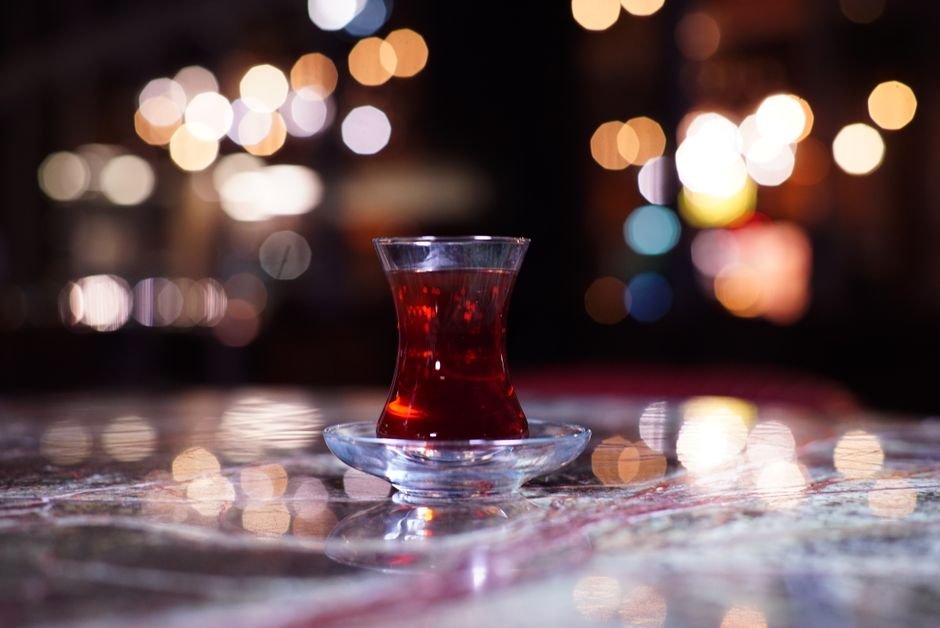
When you spend enough time observing ordinary life in Turkey, you realize that the clock is not measured entirely in hours, but in round numbers of empty tea glasses collected from a desk or a café table. This deep-rooted habit shapes how people connect, negotiate, and simply pause. If you have ever tried to talk business in a dusty hardware shop in Istanbul or a carpet boutique in a small Anatolian town, you already know that money never changes hands without at least one round of tea arriving first on a small tin tray.
The logistics behind this constant flow of hot liquid are worth noting. Offices, bazaars, and neighborhood shops do not rely on electric kettles tucked away in break rooms. Instead, a local tea house, or çay ocağı, acts as the central hub for an entire street. A young runner balances a circular metal tray dangling from a thin string handle, navigating heavy traffic and uneven pavement with a physical grace that defies physics. Nobody orders the tea with complicated specifications; it arrives hot, strong, and dark, accompanied by two small sugar cubes wrapped in paper. Whether you actually use the sugar is entirely up to you, but leaving it untouched is a subtle indicator that you prefer the pure, slightly astringent bite of the black leaves.
Of course, tea is not the only hot drink vying for attention in local social spaces. If you are curious about the heavier, thicker alternative that demands a completely different pace of consumption, you might want to look into Turkish coffee etiquette to understand why coffee is treated as a ceremonial punctuation mark, whereas tea is the steady drumbeat of the entire day.
Workplaces, Waiting Rooms, and the Endless Refill
Step into any bureaucratic office, tailor’s workshop, or corporate headquarters, and the atmosphere changes the moment the tea tray appears. It serves as a social equalizer. Hierarchies soften over a glass of tea. A tense discussion between a landlord and a tenant or a mechanic explaining a catastrophic engine failure to a bewildered driver will invariably pause for the delivery of the tray. The first sip acts as a diplomatic reset button.
One of the most fascinating aspects of Turkish tea culture is its unwritten rule regarding refills. In many Western cultures, asking for a second cup of specialty tea or coffee incurs an extra charge or a raised eyebrow from the server. Here, the concept of a standalone, single glass of tea is almost incomplete. As soon as you finish your first glass—which vanishes remarkably fast given its modest size—the waiter or the office host is usually already hovering nearby with a fresh pour. Refusing a second glass requires genuine diplomatic effort, as hospitality here is expressed through abundance rather than minimalism.
This rhythm extends far beyond land-locked offices. On the historic commuter ferries crossing the Bosphorus between Europe and Asia, the tiny tea kiosk on the lower deck is a hive of activity. Commuters standing in the chilly sea spray will nurse a steaming glass while watching seagulls dive for breadcrumbs, anchoring themselves against the wind with a warmth that costs very little.
Avoiding Clichés: What Tea Is Not
Travel writing often paints Turkish tea through an overly romanticized lens—portraying it as an ancient, mystical ceremony performed in carpet-lined tents while wise elders whisper folk tales. Strip away that glossy marketing language, and the reality is far more mundane, comforting, and practical.
It is consumed by construction workers balancing on scaffolding, university students cramming for exams in noisy municipal libraries, and elderly men playing backgammon in neighborhood coffeehouses until late at night. The tea itself is rarely artisanal or single-origin; it is typically grown on the misty, green hillsides of Rize on the eastern Black Sea coast, blended for maximum strength, and brewed in a double boiler known as a çaydanlık. The top pot holds a concentrated brew, while the bottom pot boils plain water, allowing each drinker to dilute the mixture to their exact personal preference—açık (light) or koyu (dark).
Understanding this unpretentious approach helps newcomers fit right in. You do not need to analyze tasting notes or praise the harvest year. You simply accept the glass when it is placed before you, hold it by the narrow waist to protect your fingers, and let the conversation unfold at its own natural pace.