When international patients research hair restoration procedures, the comparison between FUE vs DHI Turkey often dominates online forums, social media videos, and clinic advertisements. Turkey has established itself as a global hub for hair transplantation, drawing thousands of medical travelers each month. However, marketing terms can frequently obscure the actual surgical mechanics involved in these techniques. Understanding what separates Follicular Unit Extraction (FUE) from Direct Hair Implantation (DHI) requires looking past commercial branding to examine how grafts are harvested, preserved, and implanted by qualified medical professionals.
Before Turkey operates strictly as an independent digital publishing and content platform rather than a medical provider, agency, or clinic-matching service. This editorial overview aims to break down the technical differences between these methods calmly and objectively. Deciding on a surgical approach is never a one-size-fits-all matter; it depends heavily on individual anatomical factors, donor hair characteristics, and thorough clinical evaluation. Before committing to any medical procedure abroad, patients should always consult an independent healthcare professional.
To navigate the planning process safely, reviewing a medical clinic in Turkey can provide helpful structural guidance on evaluating safety standards, facility credentials, and operational transparency.
Demystifying the Terminology: FUE vs DHI in Turkey
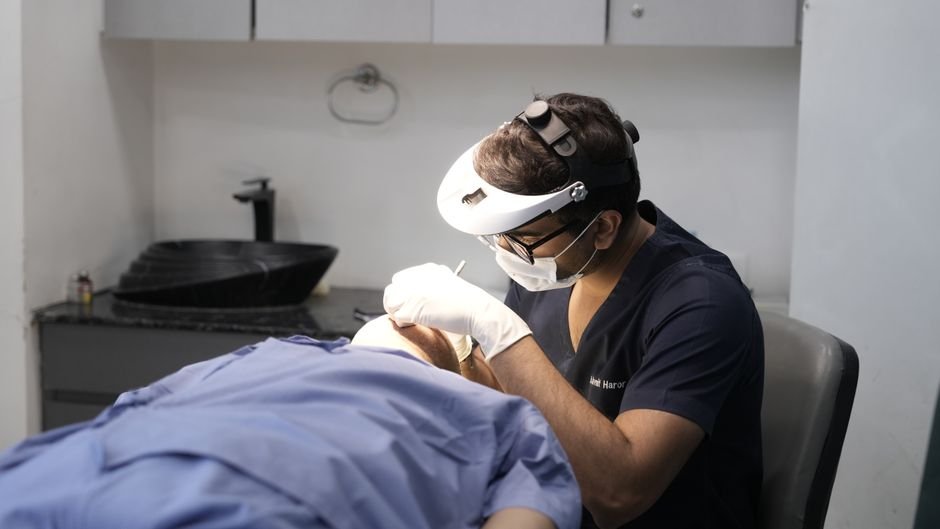
The core distinction in the FUE vs DHI Turkey discussion lies primarily in how grafts are placed into the recipient area, rather than how they are extracted. Both techniques begin with the exact same initial harvesting phase. Hair follicles are individually removed from the donor zone—typically the back and sides of the scalp—using a micro-motor or manual punch tool. Once extracted, these follicular units are sorted, cleaned, and stored in a specialized solution to maintain their viability outside the body.
The divergence occurs during the implantation stage. In a standard FUE procedure, the surgeon or technician creates microscopic incisions (channels) across the recipient area using a specialized blade or needle. Afterward, the harvested grafts are manually placed into these pre-made channels using forceps. In contrast, DHI utilizes a specialized mechanical tool known as a Choi Implanter Pen. The follicle is loaded directly into the hollow needle of the pen, allowing the practitioner to create the channel and implant the graft simultaneously in a single motion.
Despite how clinics market these two approaches as entirely different procedures, DHI is technically a specialized variation of FUE. Both rely on follicular unit extraction for harvesting. The choice between them influences aspects such as density potential, session duration, and the extent of head shaving required, but neither method guarantees a flawless outcome or eliminates surgical risks entirely.
Extraction Phase Similarities
Because DHI is an offshoot of standard FUE, the donor area harvesting process remains largely identical across both methods. The surgeon must evaluate the donor capacity carefully, ensuring that over-harvesting does not cause visible thinning or scarring at the back of the head. The health and density of the donor hair dictate how many grafts can safely be removed during a single session.
During this phase, precision is critical regardless of the implantation technique chosen. Micro-punches ranging from 0.6 to 0.9 millimeters in diameter are typically used to isolate individual follicular units. The angle of extraction must match the natural direction of hair growth beneath the skin to minimize transection—the accidental cutting of the hair root. If transection rates are high due to inexperienced hands or improper tool settings, the usable graft count diminishes, which can negatively impact the final aesthetic result.
Implantation Mechanics: Channels vs. Implanter Pens
The fundamental differences between FUE and DHI become apparent once the extraction phase concludes. Each method employs a distinct philosophy and toolset for placing the grafts into the thinning or balding zones.
- Standard FUE: Involves two distinct steps for placement. First, incisions or slits are opened across the recipient area. Second, the grafts are inserted individually with fine forceps. This method allows the surgical team to cover large surface areas efficiently and control the exact depth and angle of the slit before placement.
- DHI (Direct Hair Implantation): Combines incision and placement into one step using a Choi pen. The follicle is loaded into the pen needle, which is then pressed into the scalp at a precise angle to release the graft. This technique is often favored for finer work, such as filling in gaps between existing hair or reconstructing hairline density, because it reduces the time grafts spend outside the body.
While DHI is frequently marketed as “incision-free,” microscopic openings are still created when the pen needle enters the dermis. The key difference is that these openings are made simultaneously with the insertion of the follicle, whereas FUE creates all channels beforehand.
Evaluating Advantages and Limitations
Every surgical technique carries a specific set of trade-offs. No single method is universally superior for every patient profile, hair type, or degree of hair loss.
Standard FUE is generally more time-efficient and cost-effective for extensive hair restoration cases requiring thousands of grafts. Because the channels are opened in advance, a synchronized surgical team can place grafts rapidly. However, it requires exceptional coordination to ensure that graft handling time is minimized, as prolonged exposure outside the body can reduce follicle survival rates.
DHI offers precise control over the depth, direction, and angle of each implanted hair, making it particularly useful for patients who wish to preserve existing native hair without causing shock loss. Because the Choi pen minimizes handling trauma, graft survival can be high. On the downside, DHI sessions are often more labor-intensive, require specialized training for the entire surgical team, and generally come at a higher financial cost. Furthermore, DHI may not always be practical for very large-scale sessions exceeding thousands of grafts within a single day.
The Critical Importance of Diagnosis, Planning, and Practitioner Involvement
In medical tourism, patients frequently fall into the trap of focusing solely on the technique name—FUE versus DHI—while overlooking the qualifications of the medical personnel performing the work. A successful hair restoration outcome depends far more on accurate medical diagnosis, strategic hairline design, and careful surgical execution than on the specific brand of implanter pen used.
Hair loss can stem from various underlying medical conditions, genetic patterns, nutritional deficiencies, or dermatological issues. A qualified clinician must examine the scalp to determine whether a patient is a suitable candidate for surgery or if alternative treatments are warranted. When traveling for care, it is essential to ask detailed questions about who will perform the critical steps of the operation. To prepare effectively for these discussions, reviewing hair transplant consultation in Turkey can help patients structure their inquiries regarding medical oversight and physician involvement.
Ethical clinics ensure that a licensed physician oversees or directly executes the critical phases of extraction and channel creation, rather than delegating the entire procedure to unqualified technicians. Marketing promises of guaranteed density or permanent results should be viewed with caution, as human biology and healing responses always vary from person to person.
Risks, Limitations, and Realistic Expectations
Hair transplantation is a surgical procedure that involves real medical risks, regardless of whether FUE or DHI is selected. Common temporary side effects include swelling of the forehead, redness, minor bleeding, and crusting around the grafted sites. More serious, though less frequent, complications can include infection, poor graft growth, unnatural-looking hairlines, donor site over-harvesting, and permanent scarring.
Managing expectations is an essential component of the decision-making process. Hair restoration redistributes existing permanent hair from the donor area to areas experiencing loss; it does not create new hair follicles or stop progressive hair thinning. Patients often experience a shedding phase—known as shock loss—several weeks after the procedure, where the newly transplanted hairs fall out before regrowth begins months later. Final results typically take between 12 to 18 months to fully manifest.
Because medical regulations, clinical standards, and individual health profiles differ widely, readers are strongly advised to consult independent healthcare professionals, verify provider credentials thoroughly, and base their decisions on clinical reality rather than promotional advertising.