Antalya Old Town Guide: How to Explore Kaleiçi
On this page
The scent of old stone, damp bougainvillea leaves, and salt spray hits you long before you catch your first proper glimpse of the Mediterranean from the cliffs. Walking down into Kaleiçi, Antalya’s historic core, feels less like stepping into a static open-air museum and more like dropping into a living neighborhood that has quietly absorbed centuries of empires, merchants, sailors, and wandering poets. If you are preparing an Antalya old town guide for your upcoming travels, the secret is not to chase every single pin on a digital map, but to let the maze of narrow lanes pull you downward toward the ancient Roman harbor, where the sheer limestone cliffs hold up the city above.
This ancient quarter is wrapped in stone walls that have witnessed Hellenistic, Roman, Byzantine, Seljuk, and Ottoman eras overlap, stitch by stitch. Rather than treating Kaleiçi as a checklist item to rush through on a blistering afternoon, it rewards a slower, more observant approach. Whether you have a single leisurely morning or a full day to lose yourself among the bay-windowed Ottoman houses, understanding the natural flow of the neighborhood helps turn a standard sightseeing trip into an unforgettable Mediterranean encounter.
Navigating the Layers: Entering Through Hadrian’s Gate
Any comprehensive Antalya old town guide must begin at its grandest threshold: Hadrian’s Gate. Built in honor of the Roman Emperor Hadrian’s visit in the year 130 AD, this triple-arched marble monument stands proudly on Atatürk Boulevard, acting as the primary portal between the modern bustle of the city and the hushed, labyrinthine alleys within. As you walk beneath its soaring arches, look up to examine the carved floral reliefs and the faint traces of ancient stonemasonry that have survived nearly two millennia of footsteps. Stepping through the gate is an abrupt transition; the wide avenue traffic fades, replaced by the crunch of polished cobblestones beneath your shoes and the distant clink of tea glasses from hidden courtyards.
From this eastern entrance, the streets fan out in an organic, sometimes disorienting web. Instead of fighting the geometry of the neighborhood, embrace the gentle slope. The topography of Kaleiçi is dictated by the cliffside; almost every path you choose that descends will eventually lead you toward the sparkling blue ribbon of the sea or the horseshoe harbor tucked at the base of the cliffs. If you find yourself turned around among identical whitewashed walls and climbing vines, simply pause, check your bearings, and head downward. Before you set out to navigate these historic corridors, it is always wise to review essential practicalities, including how to manage your digital connectivity with useful travel applications that simplify local navigation and translation on the go.
The Architecture of Daily Life: Ottoman Houses and Hidden Gardens
The enduring charm of Kaleiçi lies not only in its grand ruins, but in its domestic architecture. The district is celebrated for its preserved Ottoman-era houses, many of which feature distinctive upper floors that jut out over the narrow lanes to catch the sea breeze. These structures, known locally as cumba houses, typically combine whitewashed masonry ground floors with dark timber upper frames. While some have been converted into boutique hotels, art galleries, or carpet shops, others remain private homes where laundry flutters from second-story windows and elderly residents sweep their doorsteps in the cool morning light.
Walking these residential pockets reveals a quieter side of the old town. Pomegranate trees lean over crumbling stone courtyard walls, and stray cats lounge lazily on warm marble steps. Unlike the commercial arteries lined with souvenir stalls and jewelry shops, these side streets invite you to notice the small, sensory details: the creak of an old wooden shutter, the sudden perfume of jasmine after a spring shower, or the intricate ironwork on a vintage balcony. When local shopkeepers invite you to step inside their shaded courtyards for a chat, accepting the gesture often leads to an impromptu conversation over a freshly brewed glass of black tea, echoing the timeless traditions of Turkish hospitality.
As you meander through these residential avenues, you will frequently stumble upon historic mosques and minarets that pierce the skyline. For instance, the fluted minaret (Yivli Minare), dating back to the 13th-century Seljuk period, serves as an unmistakable urban landmark. If you plan to visit active religious spaces during your walk, keeping basic cultural customs in mind ensures a respectful experience; for a deeper understanding of local etiquette, take a moment to read up on proper visitation guidelines for mosques before stepping inside sacred courtyards.
Descending to the Roman Harbor
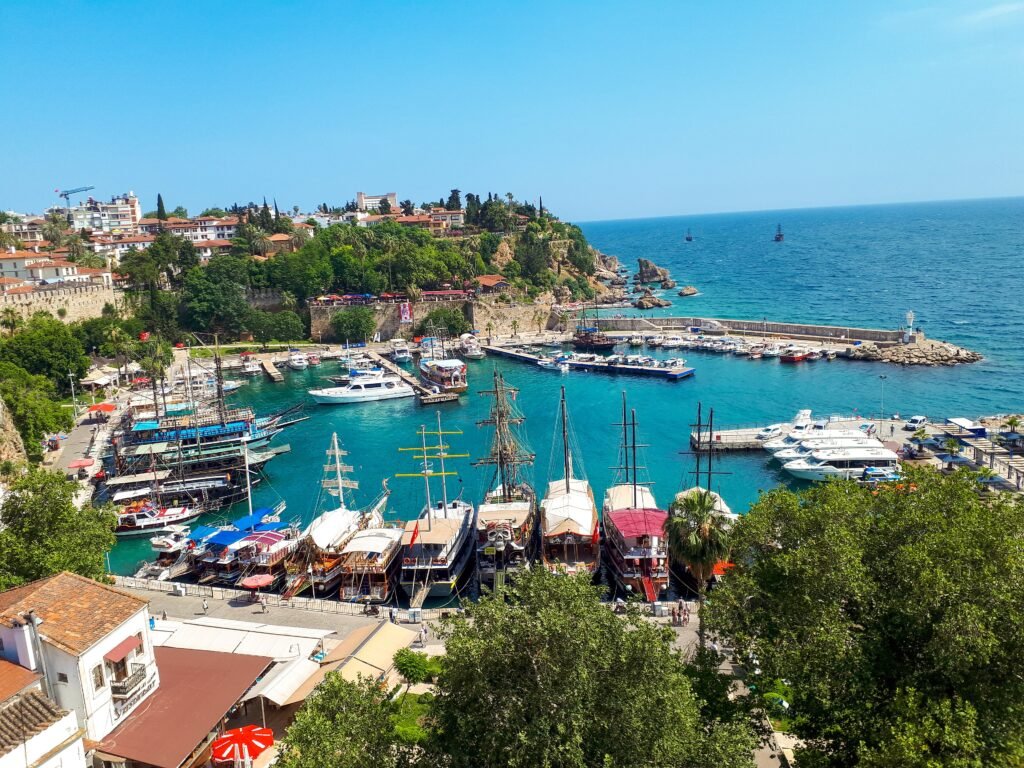
The gravitational center of Kaleiçi is undoubtedly the old Roman harbor, tucked safely at the base of the towering limestone cliffs. To reach it, you can take the panoramic glass elevator from the upper cliff park or walk down the winding, steep stone ramp known as Mermerli Sokak. As you descend, the air grows warmer, carrying a distinct mix of salt, seaweed, and grilling fish from the waterfront taverns.
Today, the harbor functions as a scenic marina filled with wooden gulets and excursion boats rather than ancient merchant galleys, but the historic breakwater still shelters the cove just as it did in antiquity. Spending an hour sitting by the water’s edge here offers a profound sense of place. You can watch local fishermen mend their nets, observe day-trippers boarding boats for coastal cruises toward the Düden Waterfalls, or simply sit on a bench and listen to the rhythmic lapping of waves against the ancient stone quay. It is a brilliant spot to pause, catch your breath, and appreciate how seamlessly Antalya’s ancient past anchors its vibrant present.
Coastal Edges: Mermerli Beach and Cliffside Views
Just a short walk from the harbor area lies Mermerli Beach, a tiny, privately managed stretch of pebble and platform shoreline squeezed directly beneath the historic cliff walls. While it is not a sprawling sandy resort beach, its location is entirely unique. Swimming here means you are floating in crystal-clear Mediterranean waters with the ancient fortified walls of Kaleiçi towering directly behind you. Renting a sun lounger for a couple of hours during the peak of the afternoon offers a refreshing escape from the city heat, blending a casual beach afternoon with historic sightseeing.
If you prefer to stay dry, the cliff tops surrounding the harbor provide some of the finest viewpoints in the entire province. Several cliffside parks, such as Karaâlioğlu Park at the southern edge of the old town, offer sweeping vistas across the Gulf of Antalya toward the majestic, snow-capped Beydağları mountains. Walking along the shaded pathways of Karaâlioğlu Park, flanked by towering palm trees, citrus groves, and weathered sculptures, reveals why historical commanders and sultans fought so fiercely to secure this specific stretch of coastline.
Evening Atmosphere and Dining in Kaleiçi
When the sun dips low behind the western mountains, casting a warm golden and amber glow across the limestone cliffs, Kaleiçi undergoes a wonderful transformation. The intense daytime heat recedes, and the neighborhood shifts into a lively, convivial evening hub. Lanterns flicker to life above restaurant doorways, and the scent of wood-fired flatbreads, fresh mezes, and roasted meats spills out into the cooling alleys.
Dining in the old town ranges from intimate courtyard bistros serving traditional Aegean and Mediterranean olive-oil dishes to bustling rooftop terraces where you can sip cold drinks while watching the city lights twinkle over the marina. Because Kaleiçi is compact and entirely pedestrianized, exploring its restaurants and bars by foot after dark is safe and deeply atmospheric.
When shopping for local crafts, textiles, or small keepsakes during your evening stroll, you may find yourself engaging in lighthearted negotiations with shop owners. While haggling is a customary part of the retail culture in certain traditional markets, it helps to know where bargaining is appropriate and where fixed pricing applies, ensuring your interactions remain friendly and mutually respectful.
Practical Tips for Your Visit
To make the most of your time exploring Kaleiçi, a few practical considerations will keep your journey smooth and stress-free:
- Footwear matters: The historic stone-paved streets can be remarkably slick, especially on downhill slopes or after a light rain. Wear supportive, flat walking shoes rather than brand-new footwear or high heels.
- Timing is everything: To experience the quietest, most photogenic version of the old town, arrive early in the morning just as the shops are opening and the streets are washed clean. Midday can become quite warm during summer months.
- Lose the map: While it is easy to rely on smartphones, some of the best discoveries in Kaleiçi happen down unnamed alleys where quiet residential life unfolds away from the tourist crowds.
- Cash and cards: While most boutique hotels, sit-down restaurants, and larger shops accept credit cards, keeping some smaller Turkish Lira banknotes handy is useful for buying fresh street fruit, bottled water, or tea from small vendors.
Kaleiçi is not a destination to rush through with a rigid timetable. By giving yourself permission to wander aimlessly between its ancient gates, shaded gardens, and cliffside lookouts, you allow the true spirit of Antalya’s historic heart to reveal itself at its own unhurried, beautiful pace.