Solo female travel Turkey safety tips are a top concern for many women planning a trip. You have likely heard mixed stories. Some people will tell you it’s the most welcoming place on earth, while others will share stories of scams or unwanted attention. This guide from the Before Turkey editorial team gives you honest, practical advice so you can navigate Turkey with confidence.
Turkey is generally a welcoming country for solo female travelers, and millions of women visit on their own every year. The best safety tip is to use the same common sense you would in any major European city: be aware of your surroundings, trust your intuition, use trusted transport apps like BiTaksi or Uber, and dress respectfully, especially when visiting religious sites or more conservative areas.
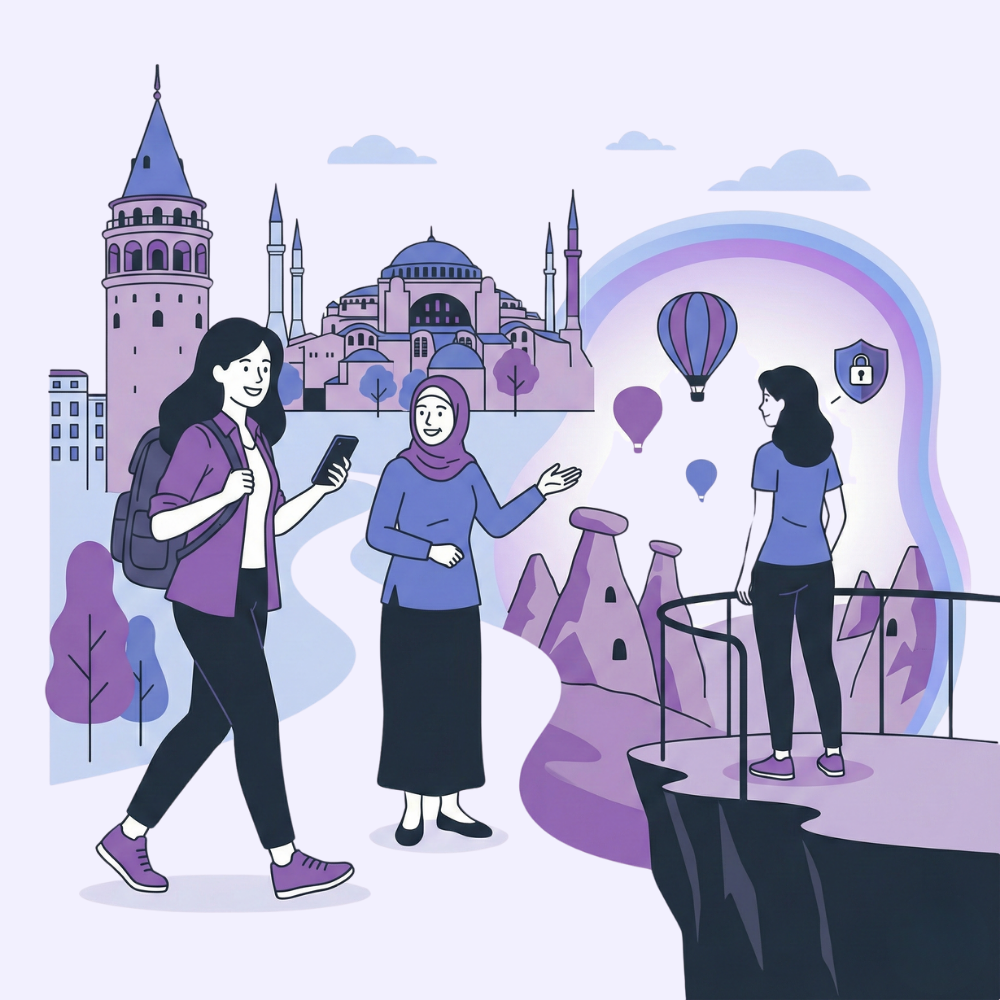
Solo Female Travel Turkey Safety Tips: Our Core Advice
Solo female travel Turkey safety tips often start with a simple question: “Is it safe?” For most visitors to the main tourist regions, the answer is yes. Turkey has a deep culture of hospitality, and in most places you will find people helpful and kind.
However, like any country with over 85 million people and major metropolises like Istanbul, there are risks. The tourist areas of Istanbul, Cappadocia, and the southern coast (like Antalya and Bodrum) are very accustomed to international visitors. The issues travelers most often report are not violent crime, but petty scams and, at times, unwanted male attention. This guide focuses on how to prepare for and handle these situations.
What Do Official Travel Advisories Say?
Government travel advisories are worth reading before any trip. The U.S. Department of State, for example, has placed Turkey at “Level 2: Exercise Increased Caution”, citing risks such as terrorism and arbitrary detentions, and it advises against travel to areas near the Syrian border. Advisory levels and wording change, so check the current advice from your own government (such as the U.S. State Department or the UK Foreign Office) before you travel.
In tourist areas, be aware of your belongings in crowded places like the Grand Bazaar or on the T1 tram line in Istanbul to avoid pickpocketing. This is standard advice for any major city.
What to Wear: Blending In and Staying Comfortable
One of the most useful solo female travel Turkey safety tips is simply to be mindful of your clothing. This is not about strict rules, but about respecting local culture and managing the attention you receive.
In Big Cities (Istanbul, Izmir, Antalya)
In modern neighborhoods like Karaköy or Nişantaşı in Istanbul, or in coastal cities like Izmir and Antalya, you can wear what you would wear at home. You will see local women in jeans, dresses, skirts, and t-shirts. Our editors suggest aiming for “smart casual”; very short skirts or low-cut tops may attract more stares than you are comfortable with.
In Conservative Areas & Mosques
When you visit a mosque, women are expected to cover their hair and to wear clothing that covers the shoulders and knees. Loose, long trousers or a long skirt are the most comfortable choice.
- Head: Bring a light scarf (a pashmina is perfect) with you.
- Shoulders & Legs: No tank tops, shorts, or short skirts.
If you are not dressed appropriately, major mosques like the Blue Mosque or Süleymaniye usually provide wraps and headscarves at the entrance.
In more conservative neighborhoods (like Fatih in Istanbul) or in smaller central Anatolian towns, you will feel more comfortable dressing modestly by covering your shoulders and knees.
For Nightlife
If you are going out to a nice restaurant, a rooftop bar, or a club, feel free to dress up. People in Istanbul’s nightlife areas dress in stylish, modern clothing.
Navigating Transport Safely
Taxis: The Most Common Pitfall
The most common complaint travelers report is about taxis. Some drivers may try to overcharge by:
- Claiming the meter is broken.
- Taking a very long, scenic route.
- Swapping your 50 Lira note for a 5 Lira note and claiming you underpaid.
- Being aggressive about the price.
How to avoid this: Use an app instead of hailing taxis on the street, especially in tourist zones. BiTaksi is the most popular local app, and Uber also works (it calls a yellow or turquoise taxi for you). These apps log the driver and route, which makes overcharging much harder.
Public Transport: Your Best Friend
The easiest and cheapest way to get around Istanbul is by public transport. The metro, tram, and ferry systems are clean and widely used.
We recommend buying an Istanbulkart from a yellow Biletmatik machine at any metro or tram station. You can load it with money and use it for all public transport. The ferries are a beautiful way to travel between the European and Asian sides of the city. For more information, see the official Istanbulkart website.
How to Handle Unwanted Attention
Some women experience staring or comments from men on the street (“Hello,” “Where are you from?”). This can range from annoying to genuinely intimidating, and you never have to tolerate it. Shopkeepers in places like the Grand Bazaar or Spice Bazaar can also be very forward when trying to get you into their shops; that is usually a sales tactic.
Our editors’ rule of thumb for unwanted attention: do not engage. A polite smile can sometimes be mistaken for an invitation. A firm look and continuing to walk is the clearest signal you can send.
If someone is persistent, be firm. A loud, clear “No” or the Turkish word “Hayır!” is very effective. If you feel uncomfortable, step into a shop, restaurant, or hotel and ask for help. If you feel unsafe or are harassed, call 112, Turkey’s emergency number.
Quick Safety Checklist & Common Scams
- Do not hail taxis in tourist areas. Use BiTaksi or Uber.
- Do buy an Istanbulkart for public transport.
- Do carry a scarf with you for mosque visits.
- Do not feel obliged to be polite to men who approach you on the street. Keep walking.
- Do not accept a “free” shoe shine. A man drops his brush, you pick it up, and he insists on a “free” shine, then demands an absurd payment.
- Do not go to a bar or club with a new “friend” you just met on the street. This can lead to the “bar scam,” where you are presented with a massive bill.
- Do save 112 (emergency) in your phone.
- Do trust your gut. If a situation feels wrong, leave.
Frequently Asked Questions
Is it safe to walk alone at night in Istanbul? In busy, well-lit areas like Istiklal Avenue, Karaköy, or Kadıköy, it is generally fine. As in any major city, we advise against walking alone on empty, dark streets late at night. Use a taxi app for door-to-door service if you are out late.
Do I need to cover my hair in Turkey? No. You only need to cover your hair when you are inside a mosque. You do not need to cover your hair on the street.
What is the best way to get from the Istanbul airports (IST or SAW)? The metro and the Havaİst (IST) or Havabus (SAW) shuttle buses are reliable options that go to central points like Taksim and Kadıköy. If you take a taxi, use the official taxi rank or an app. See our Istanbul airport transfer guide for a full comparison.
Are apps like Uber or BiTaksi reliable? Yes. They are the most widely recommended way to use taxis in Istanbul because the driver and route are logged in the app.
Spotted something outdated or inaccurate in this guide? Let us know at ask@beforeturkey.com so our editors can review it.