Searches for a safe hair transplant clinic in Turkey have exploded. Turkey is one of the world’s best-known destinations for this procedure, but its popularity has a dark side. Some visitors arrive expecting a doctor-led procedure but end up in a “hair mill”: a facility that runs like a factory, with under-qualified staff performing the surgery. This guide explains how to check a clinic’s credentials yourself and reduce the risks.
This article is general information, not medical advice. Before Turkey does not recommend individual clinics or arrange treatment. Please read our Medical Disclaimer and discuss your case with a qualified doctor.
The most important step in finding a safe hair transplant clinic is to focus on credentials rather than price. Check that the facility holds an International Health Tourism Authorization Certificate (you can look up authorized providers on the official HealthTürkiye platform), find out exactly which doctor will treat you, and ask for written confirmation that a qualified doctor will perform the critical parts of the surgery, especially the incisions. Membership of the International Society of Hair Restoration Surgery (ISHRS) is an additional, voluntary sign of professional commitment.
Why “Hair Mills” Are a Major Risk
“Hair mills” (sometimes called saç fabrikası locally) prioritize volume over patient safety. They may perform many surgeries in a single day.
To handle that volume, some of these clinics let technicians perform most or all of the surgery. A doctor’s name may be on the website, and you may meet them for a brief consultation, but they may not be present for the procedure. Surgical procedures performed without proper medical responsibility are not permitted, and they increase the risk of poor results, infection, and permanent scarring.
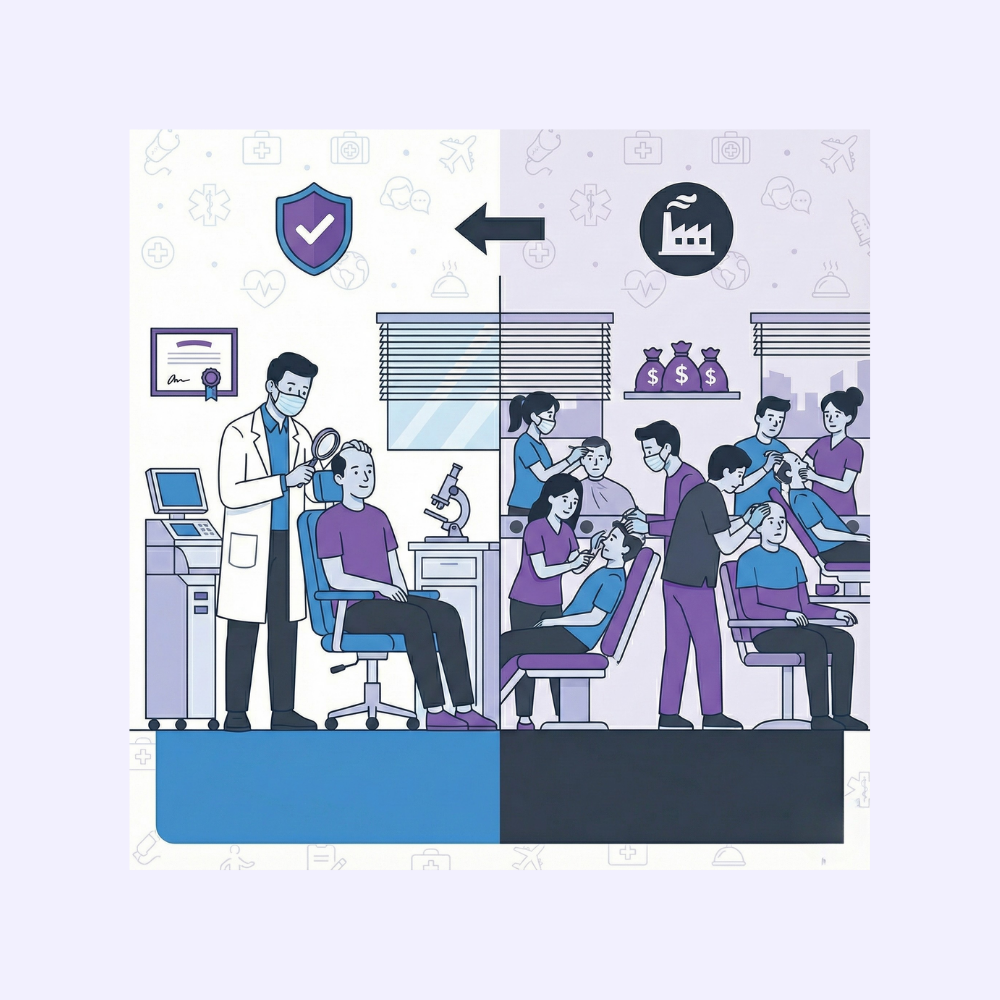
The Critical Difference: Doctor vs. Technician
In a well-run clinic, technicians are an important part of the team. They assist the doctor and may help with graft extraction or implantation under the doctor’s direct supervision.
Professional bodies such as the ISHRS stress that key surgical decisions and steps should be performed by a qualified doctor, including:
- The Consultation: Assessing your hair loss and suitability for surgery.
- Surgical Planning: Designing the hairline.
- Anesthesia: Administering the local anesthetic.
- Channel Opening: Making the incisions where the grafts will be placed.
The angle, depth, and direction of the incisions strongly influence how natural the result looks. Risks associated with poorly supervised surgery include:
- An unnatural, “pluggy” hairline.
- Low graft survival.
- Visible scarring or over-harvesting of the donor area.
- Infection from poor hygiene.
How to Verify a Clinic’s Credentials (Your Safety Checklist)
Do not rely on marketing claims. Do your own checks:
- Health Tourism Authorization: Facilities serving international patients need an International Health Tourism Authorization Certificate. Ask to see it and check the provider on HealthTürkiye.
- The Facility: The procedure should take place in a properly licensed and equipped medical facility.
- The Doctor’s Credentials: Who is the doctor? What is their specialty, and how much experience do they have in hair restoration specifically?
- ISHRS Membership: Membership is voluntary, but you can check a doctor’s name on the ISHRS Find a Doctor page.
- Direct Consultation: Ask for a video consultation with the doctor who will perform your surgery, not only a salesperson or “coordinator.”
- Real Patient Reviews: Look for reviews with clear, unretouched photos over time. Be cautious of clinics that only show perfect results or rely heavily on influencers.
The Red Flag: “Too Good to Be True” Prices
A package offering a transplant, a five-star hotel, and VIP transfers at an unusually low price should prompt careful questions about who is actually performing the surgery.
Our editors’ rule of thumb: an unusually cheap price is not a discount; it is a reason to ask more questions. You are paying for the doctor’s time, skill, and safety standards, not just for grafts.
What to Ask Your Doctor Before Booking
- “Will you, the doctor, personally design my hairline?”
- “Will you personally make the incisions (open the channels)?”
- “How many surgeries do you personally oversee each day?” (Fewer is generally better; a very high number is a warning sign.)
- “What is the full name of the doctor who will be in the room?” (So you can check their credentials.)
- “What happens if there is a medical complication, including after I return home?”
Your safety comes first. It is better to wait and save for a reputable, doctor-led clinic than to risk your health and appearance at a “hair mill.”
Frequently Asked Questions
What is the ISHRS? The International Society of Hair Restoration Surgery is a global non-profit medical association focused on hair restoration. Membership is voluntary, but it indicates a commitment to education and professional standards.
Is it safe to get a hair transplant in Turkey? Every surgical procedure carries risks, wherever it is performed. Many patients have good outcomes in Turkey when they choose an authorized facility and a qualified doctor who performs the key steps of the surgery. The biggest avoidable risks come from choosing high-volume clinics where technicians do the surgery.
What is the role of a technician in a hair transplant? Technicians assist the surgeon, for example by helping with graft handling and implantation into channels the doctor has created. They should not independently plan the hairline or make the incisions.
Spotted something outdated or inaccurate in this guide? Let us know at ask@beforeturkey.com so our editors can review it. We are not able to answer individual medical questions or recommend clinics.