Turkish food must-try tourists often think only of döner kebab, but this is just the beginning. Turkish cuisine is a vast, ancient, and incredibly diverse world of flavors. It blends Central Asian, Middle Eastern, and Mediterranean influences. If you only eat kebabs, you are missing the true soul of Turkey. This guide will introduce you to the essential dishes, from hearty breakfasts to street food secrets, that locals love. Get ready to eat beyond the kebab.
The absolute best Turkish food must-try for tourists (beyond kebab) includes a traditional Turkish breakfast (Kahvaltı), savory pastries like Pide and Lahmacun, comforting dumplings (Mantı), and a variety of small appetizers known as Meze. For a true local experience, you must also try street foods like Islak Burger, Kumpir, and the famous (or infamous) Kokoreç, all found in local restaurants called “Esnaf Lokantası.”
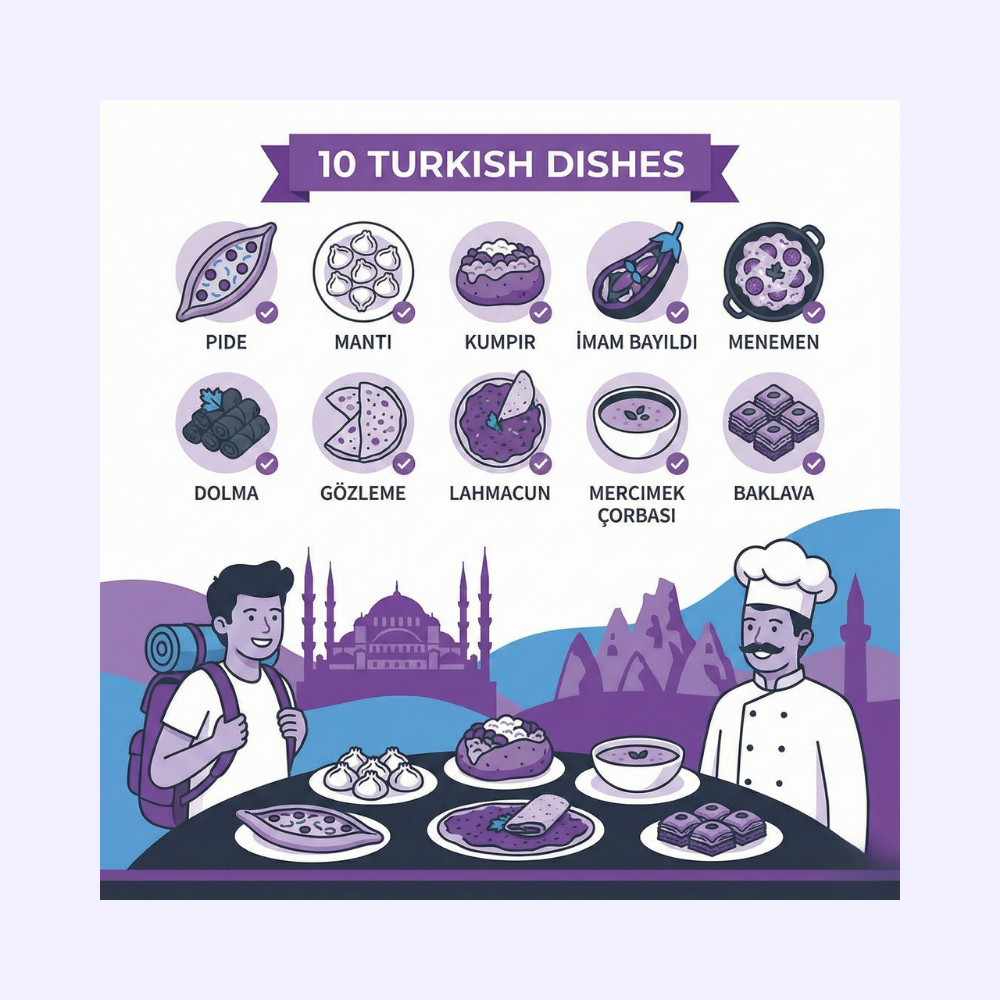
Turkish Food Must-Try Tourists: Why It’s More Than Just Kebab
Turkish food must-try tourists quickly discover is that “kebab” is a category, not a single dish. While delicious, focusing only on Döner or Şiş kebab is like visiting Italy and only eating spaghetti. The real culinary magic lies in regional specialties, home-style cooking, and the vibrant street food culture. Turkey’s cuisine is built on fresh, seasonal ingredients, ancient cooking techniques, and a deep cultural belief in hospitality. Sharing a meal is a cornerstone of Turkish life. This guide focuses on the authentic, everyday dishes that will give you a real taste of the country.
1. The Unmissable King: Turkish Breakfast (Serpme Kahvaltı)
Forget cereal or a simple piece of toast. The Turkish breakfast, or Serpme Kahvaltı (spread breakfast), is a magnificent event. It is not a quick bite; it is a social gathering designed to be enjoyed over several hours with friends and family.
When you order a serpme kahvaltı, the table will be filled with small plates. You can expect:
- A basket of fresh, crusty bread (like simit, a sesame-covered bread ring).
- Multiple types of cheese, from soft beyaz peynir (like feta) to aged kaşar.
- Black and green olives.
- Bal-kaymak (clotted cream) drowned in honey.
- Various jams and preserves (rose, fig, apricot).
- Fresh tomatoes, cucumbers, and peppers.
- Eggs, usually served as menemen (scrambled with tomatoes and peppers) or sahanda yumurta (fried).
- Su böreği, a savory pastry with cheese.
This entire spread is accompanied by endless glasses of hot, black Turkish tea. As locals, our weekends are built around this meal. It is the single best way to start your day in Turkey.
2. The ‘Home Cooking’ Experience: What is an Esnaf Lokantası?
One of the best pieces of advice we can give you is to find an Esnaf Lokantası. This translates to a “tradesman’s restaurant.” These are simple, no-frills eateries that serve traditional, home-style Turkish food, known as sulu yemek (dishes with juice or broth).
You won’t find fancy menus here. Instead, you walk up to a steam table (bain-marie) and point at what looks good. The menu changes daily based on what is fresh at the market. This is where local shop owners, office workers, and families come for a quick, affordable, and incredibly delicious lunch. This is where you find the authentic Turkish food must-try tourists so often miss.
My personal rule when traveling in Turkey: if you want the best lunch, find the busiest Esnaf Lokantası near the local market. Don’t look for a fancy menu; just point at what looks good. You will never be disappointed.
3. The Big Three: Pide, Lahmacun, and Mantı
These three dishes are as central to Turkish cuisine as kebab, and each offers a unique, comforting flavor.
Pide: The ‘Turkish Pizza’
Pide (pee-deh) is a boat-shaped flatbread with a thick, chewy crust. It’s baked in a stone oven and can be topped with various ingredients. The most popular types are:
- Kuşbaşılı: With small, diced cubes of lamb or beef.
- Kaşarlı: Filled with melted kaşar cheese.
- Sucuklu: With spicy Turkish sausage (sucuk).
It’s usually served cut into strips, perfect for sharing.
Lahmacun: The Thin and Crispy Classic
Often called “Turkish pizza” by mistake, lahmacun (lah-mah-joon) is very different. It is a round, paper-thin piece of dough topped with a light layer of minced meat, onions, and spices. It bakes in seconds in a wood-fired oven. The correct way to eat it: squeeze fresh lemon juice over it, add a sprinkle of parsley, roll it up like a wrap, and eat it with your hands.
Mantı: The Turkish Dumpling
If you love dumplings, you must try mantı. These are tiny, handmade dumplings, usually filled with a small amount of spiced minced meat. They are boiled and then served in a large portion, smothered in two sauces: a cool garlic-yogurt sauce and a hot sauce of melted butter and red pepper flakes. It is the ultimate comfort food.
4. The Heart of the Meal: Meze Culture
A meze (meh-zeh) is a small appetizer or side dish, but it’s really a style of eating. In a meyhane (a traditional restaurant), a group will order a table full of different mezes to share, often alongside rakı (the national anise-flavored spirit).
Here are a few essential mezes to look for:
- Fava: A smooth, cold purée of fava beans, topped with olive oil and fresh dill.
- Girit Ezmesi (Cretan Paste): A spicy, rich, and tangy spread made with cheese, pistachios, and peppers.
- Muhammara: A dip made from roasted red peppers, walnuts, and sweet-sour pomegranate molasses.
- Patlıcan Salatası (Eggplant Salad): A simple, smoky salad of grilled, mashed eggplant, garlic, and olive oil.
- Haydari: A thick, strained yogurt dip with garlic, dill, and mint.
5. Istanbul’s Essential Street Foods
No trip is complete without exploring the street food, especially late at night.
Kumpir: The Ultimate Baked Potato (Ortaköy Style)
This is not your average baked potato. Kumpir starts with a giant potato that is baked, cut open, and then mashed vigorously with butter and cheese until it’s fluffy. Then, the real fun begins. You go to a counter with dozens of toppings—olives, corn, pickles, kısır (bulgur salad), Russian salad, sausage—and you tell the maker “add everything.” It’s a massive, delicious, and chaotic meal in a potato.
Islak Burger: The ‘Wet’ Burger of Taksim
Found in Taksim Square, the ıslak burger (wet burger) is a local legend. It’s a small, simple beef patty on a soft white bun. The entire burger is then dipped in a garlic-tomato sauce and left to steam in a glass box. The result is a soft, garlicky, and incredibly addictive snack, especially after a night out.
Kokoreç: The Daring Delicacy
Kokoreç (ko-ko-retch) is the most adventurous food on this list, but it is beloved by locals. It consists of spiced, seasoned lamb intestines, wrapped around a long skewer and roasted horizontally over charcoal. When you order, the chef slices off a portion, chops it finely with tomatoes and green peppers, adds more spices (like cumin and oregano), and stuffs it all into a fresh loaf of bread.
This might be the most challenging Turkish food must-try tourists encounter, but if you are an adventurous eater, the smoky, spicy, and rich flavor is an unforgettable experience.
Frequently Asked Questions
What is the most famous food in Turkey? While döner kebab is famous worldwide, the most iconic dish depends on the region. In Istanbul, it could be pide or a fresh fish sandwich (balık ekmek). In Gaziantep, it’s baklava and yuvalama (a yogurt soup).
Is food in Turkey expensive? No, food in Turkey is generally very affordable, especially if you eat at an Esnaf Lokantası or stick to street food. You can get a huge, delicious meal for a fraction of the price you would pay in Western Europe or the US.
What is a “simit”? Simit is a circular bread ring covered in sesame seeds. It’s a staple breakfast item and the most popular street food in Turkey. You will see vendors selling them from red carts everywhere. It’s best eaten fresh with a small piece of cheese or just plain.
What should I drink with Turkish food? Ayran (a savory, cold yogurt drink) is the perfect companion to grilled meats, pide, and lahmacun. For breakfast and all day long, Turkish tea (çay) is the standard. And of course, no meal is truly complete without trying a small, strong Türk Kahvesi (Turkish coffee) to finish.
If you have any important questions about this topic, you can reach us at ask@beforeturkey.com or through the contact form on our Contact page.