Most visitors to Turkey follow the same well-worn path: Istanbul’s Blue Mosque, the Cappadocia balloon ride, maybe a dip in the Aegean. These are wonderful, but they’re also crowded, expensive, and they miss the real heart of Anatolia.
Beyond the postcard destinations lies a Turkey that feels less discovered. Medieval towns where tourism hasn’t yet arrived. Ancient ruins where you might be alone with the stones. Mountain villages where daily life looks much like it did fifty years ago. These hidden destinations Turkey has to offer aren’t secret in a gatekeeping sense—locals know them well—but they exist outside the mainstream tourist narrative.
If you’re planning beyond the typical circuit, or you want to understand Turkey more deeply, Anatolia’s lesser-known corners deserve your attention. Here are ten places that deserve to be on your radar.
1. Ani: The Ghost City in the Mountains
Ani sits on the Armenian-Turkish border, a medieval Armenian capital reduced to haunting ruins. The city peaked between the 10th and 11th centuries, when it was a thriving trade hub. Today, it’s a UNESCO World Heritage Site that draws far fewer visitors than it should.
Walking through Ani feels like stepping into a different century. The Church of St. Gregory stands incomplete, its dome open to the sky. The fortress walls zigzag across the plateau. The silence is profound—you hear wind, birds, and your own footsteps.
Getting there requires a minibus from the border town of Kars, or a day trip organized from Kars itself. The landscape is stark, beautiful, and utterly different from Turkey’s coastal regions. If you’re interested in Armenian history and archaeological depth, Ani is incomparable.
2. Mardin: Stacked Stone and Sunset Views
Mardin isn’t quite hidden—it’s known among travelers who venture into southeastern Anatolia—but it remains far quieter than Cappadocia or the Turquoise Coast.
The city tumbles down a hillside in a cascade of honey-colored limestone buildings. Streets are narrow, ancient, and maze-like. The Deyrulzafaran Monastery sits outside the city, a functioning Christian monastery with roots back to 493 AD. The old bazaar still feels like a working market, not a tourist stage.
Mardin sits high enough to offer sweeping views across the Mesopotamian plains. Stay for sunset from one of the viewpoint cafés—the light turns the stone golden, and you’ll often be alone with a handful of locals.
3. Hasankeyf: Before the Water Rises
Hasankeyf is technically not hidden—it’s been in travel guides for years—but it’s becoming increasingly urgent to visit. The Turkish government is completing the Ilisu Dam on the Tigris River, and Hasankeyf’s lower old town will eventually flood.
The town clings to the river canyon walls like a living archaeological layer cake. There are cave dwellings carved directly into the rock, a 12th-century bridge, and a fortress perched impossibly high. The atmosphere is raw, almost post-apocalyptic in its beauty.
Whether you have months or years to see Hasankeyf before submersion is unclear, but the clock is real. This is a place with genuine urgency behind a visit.
4. Safranbolu: Ottoman Town Freeze-Frame
If you want to see what an Ottoman-era Anatolian town actually looked like, before restoration became trendy or over-polished, Safranbolu shows you. It’s a UNESCO World Heritage Site, but it hasn’t been Disneyfied.
The town is famous for saffron production (hence the name), and that history still echoes through the local economy. The old bazaar, the traditional wooden houses, the caravanserais—everything feels lived-in, not museumified. You can stay in a restored period house, eat traditional food in family-run restaurants, and walk streets that have changed little in structure since the 18th century.
Safranbolu is less than three hours from Ankara, making it accessible even if you’re spending time in central Anatolia.
5. Adiyaman and Mount Nemrut: Pre-Dawn Archaeology
Mount Nemrut is a UNESCO World Heritage Site, but most people know it only as “that place with the giant heads.” The real experience is far more complex.
A Commagene king built an elaborate tomb and sanctuary high on the mountain around 62 BC. Colossal statues of gods line the summit. Sunset is popular, but sunrise is where the experience deepens—the light catches the limestone faces at a different angle, and you understand the deliberate positioning better.
The town of Adiyaman itself is functional, not particularly scenic, but it serves as the base for reaching Nemrut. The journey up requires an early start, a local guide, and stamina. It’s worth the effort if you’re interested in the deeper layers of Anatolian history beyond the Hellenistic and Roman periods most tourists encounter.
6. Afyon: Beyond the Pharmacies (Geothermal Baths and Fortress Hikes)
Afyon gets dismissed as a drive-through stop, mostly known for its marble and somewhat notorious for its pharmacies selling traditional opioid-laced remedies. But the region has genuine appeal if you stop.
The Afyon Fortress sits on a dramatic rocky peak, and the hike up offers views across the Anatolian plateau. The city’s thermal springs have been used for millennia—there are several functional spa facilities where you can actually bathe in hot mineral water, not just tour it as a tourist attraction.
If you’re traveling between Cappadocia and the Aegean coast, spending a night in Afyon breaks up the journey meaningfully.
7. Konya: Sufi Spirituality and Whirling Dervishes
Konya is Turkey’s spiritual heart. It’s where the Mevlevi Order—the Whirling Dervishes—originated, and where the poet Rumi spent much of his life. The atmosphere is different from coastal or Mediterranean Turkey.
The Mevlana Museum contains Rumi’s tomb and personal possessions. The Blue Mosque (also called the Azam Mosque) is one of Turkey’s finest. The town itself feels devout, less touristy, more introspective. Women tourists should dress more conservatively than they might in Istanbul or the coast.
The annual Whirling Dervish Festival (usually December) draws crowds, but visiting outside that season offers a quieter, more authentic glimpse into Sufi practice and philosophy.
8. Amasya: The Riverside History
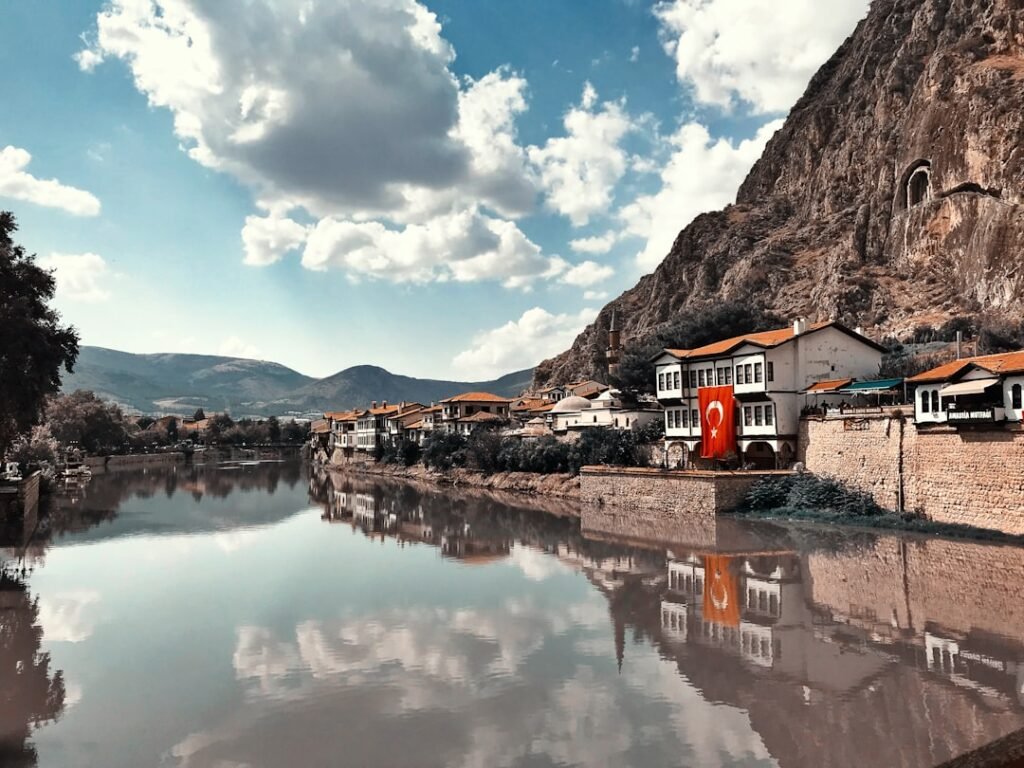
Amasya sits along the Yesilirmak River in northern Anatolia, with Ottoman-era buildings reflected in the water like something from a painting. It’s historically significant—a former capital of several empires—but barely registers on most tourist radars.
The rock tombs of Pontic kings are carved directly into the cliffs above the river. The old bazaar is genuinely functional. The riverside walk at dusk, when locals come out to stroll, feels like you’re actually experiencing daily life, not performing tourism.
It’s accessible from the Black Sea coast if you’re moving through northern Turkey, or from Ankara if you’re exploring central Anatolia.
9. Pergamon (Bergama): Less Crowded Than Ephesus
While Ephesus and Pamukkale draw massive tour groups, Pergamon remains comparatively peaceful despite being equally impressive archaeologically.
The acropolis sits high above the town. The amphitheater is vast and remarkably preserved. The library was one of the ancient world’s most important. The Asclepeion (healing temple) shows sophisticated understanding of medicine and psychology in the ancient world.
The town of Bergama itself is charming and less touristy than Selçuk or Kusadasi. You can eat well and cheaply, explore on foot, and actually think while you’re walking through history.
10. Gaziantep: Culinary Deep Dive
Gaziantep isn’t typically framed as a tourist destination at all—it’s a working industrial and commercial city in southeastern Anatolia. That’s precisely why it matters.
The city is the pistachios and copper capital of Turkey. Its food scene is among Turkey’s best: baklava, kebab, local pastries and breads that you won’t find elsewhere. The Zeugma Mosaic Museum holds some of the world’s finest Roman mosaics. The bazaars are real markets, not performance spaces.
If you’re willing to venture into less-touristy Turkey, Gaziantep offers authentic urban Anatolian life alongside genuine archaeological and culinary depth. It’s the kind of place that rewards curiosity more than guidebook following.
Planning Your Anatolia Trip
These hidden destinations Turkey has scattered across the interior aren’t more difficult to reach than the mainstream circuit—they’re just less advertised. Many require a car rental or willingness to use local transport. Turkish people, particularly outside major cities, are generally helpful with directions, and the pace of life feels slower and more genuine.
Budget-wise, accommodation and food are significantly cheaper than Istanbul or the coast. If you’re doing a longer Turkey trip and want to move beyond typical itineraries, building in time for central and southeastern Anatolia adds depth without requiring significantly more money.
The real value of these hidden destinations isn’t that they’re undiscovered—it’s that they let you understand Turkey beyond tourism infrastructure. You see how people actually live, eat, work, and worship. That’s often worth more than another Instagram-perfect photo.
—
Discover 10 hidden destinations Turkey beyond Istanbul and the coast. Explore lesser-known Anatolian gems including Ani, Mardin, Hasankeyf, and more for authentic travel experiences.